
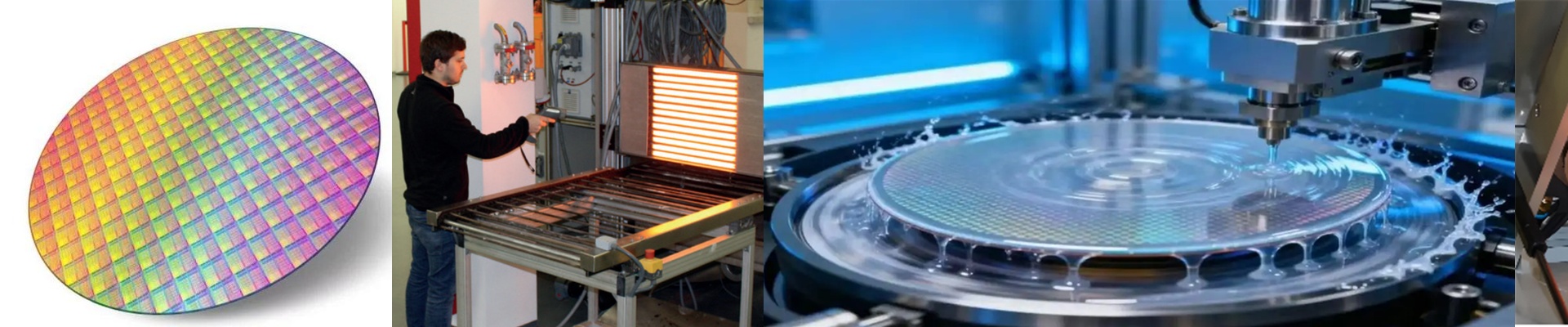
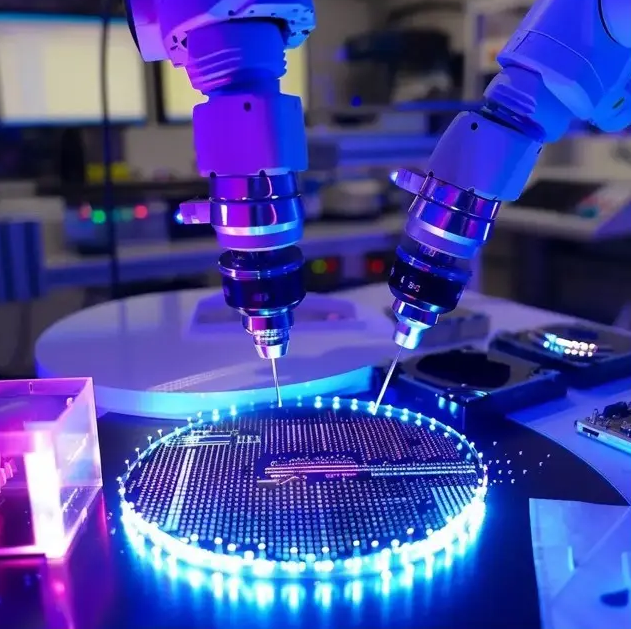
A lamp dying at 03:00 shuts the line down in a flash. Wafers pile up, bake profiles drift, and yield takes a hit. We build our semiconductor lamps to stop that from happening. What actually matters on the tool Our halogen and short-wave infrared lamps keep wafer-level thermal uniformity within ±0.1°C across the bake plate, so the soft bake and hard bake windows stay intact. They run clean in Class 1–100, generate zero particles, and hold stable output for 5,000+ hours. You get repeatable ramps, tight spectral control, and no surprise downtime in 7×24 operation. The payoff is predictable thermal budget and consistent critical dimension control. In lithography cells, you need thermal stability that doesn’t cost you throughput. These lamps hold setpoint lot after lot, so soft bake and hard bake profiles don’t drift hour after hour. That repeatability cuts scrap, keeps rework low, and shortens qualification cycles. Efficiency improves with high-efficiency reflectors and spectral matching, and the longer life means fewer hot swaps and less spares on the shelf. Here is the thing on install: these lamps need matched sockets and controlled coolant loops to keep thermal repeatability where it needs to be. Plan a tight commissioning window to align the lamp-to-plate geometry with your machine’s thermal stack. Once that geometry is set, the process stays stable—but that initial alignment is non-negotiable if you want the tightest uniformity.