
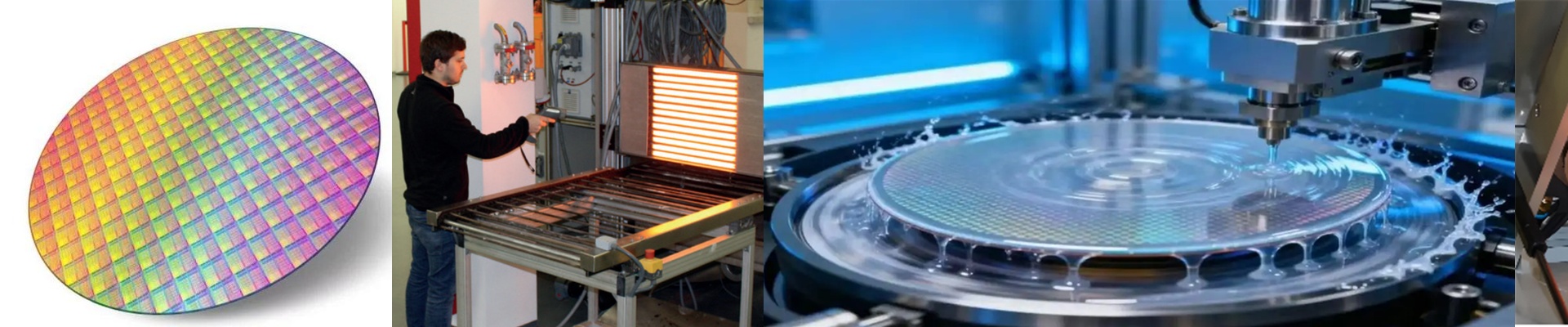
On the fab floor, the line doesn’t wait around for the oven to settle. A wafer sits at the spin-dry station, holding steady while the last bit of moisture lifts off—without taking the pattern with it. The photoresist needs a soft bake that lands within a degree, or critical dimension control starts to drift. In packaging, the underfill cure profile has to repeat shift after shift, or you’re gambling on interconnect reliability. When thermal control misses, you see it immediately: defect density climbs, yields split, and unplanned downtime ripples through the schedule. We build fab heaters in China for exactly these moments—machines for wafer drying, photoresist baking, packaging curing, and post-clean drying—because here, temperature isn’t a background setting. It is the process.
What actually matters, technically
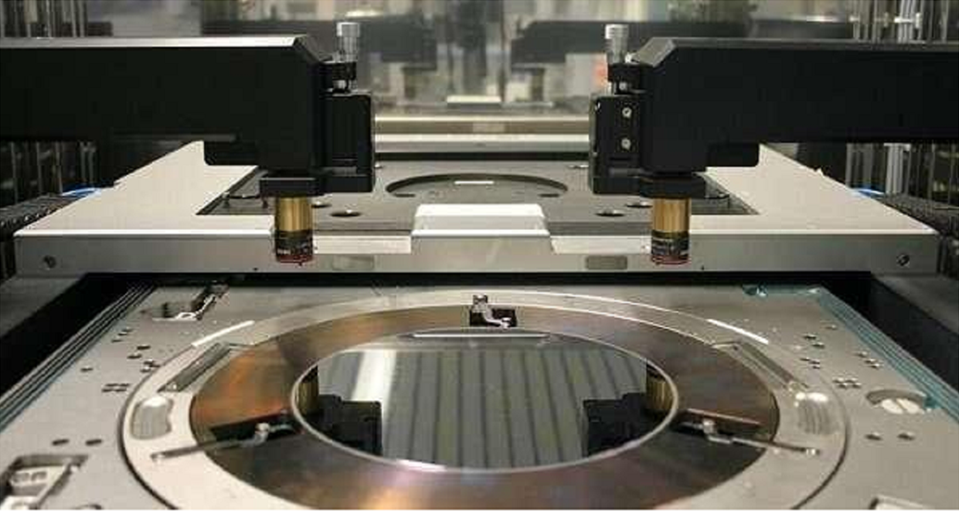
Fab heating isn’t about hitting a peak number. It’s about holding a setpoint with discipline, across the whole load, hour after hour, in a cleanroom that doesn’t forgive sloppy choices. Our heaters deliver wafer-level thermal uniformity of ±0.1°C in steady state. That number buys you lithography margin: soft bake and hard bake profiles stay in spec, so line-width variation stays tight and within control limits. Repeatability comes in as setpoint stability within ±0.5°C across shifts and across units, so you qualify once and stop worrying. The heating approach is matched to the step. For fast, clean response, we use short-wave infrared (NIR) elements—low thermal mass, strong coupling. For bake/cure ovens that need even, penetrating heat, we run quartz-based emitters and medium-wave setups that spread power evenly without hot spots. When you need fast ramp rates without overshoot, carbon-fiber heater modules give you stiff, low-inertia control. Cleanroom compatibility isn’t bolted on. We choose materials to minimize outgassing, and design mechanical interfaces to avoid generating particles. Units are rated for Class 1–100 environments, with particle generation held low enough to protect sensitive lithography and bonding steps. Reliability is engineered into the thermal stack. We track element life by hours and output stability, not marketing language. We’ve got units running above 5,000 hours with less than 5% output drop, and the instrumentation is built for 24/7 operation—scheduled maintenance windows, not surprise failures. Electrical and mechanical fit are part of the recipe. Inputs are configurable for global fab power standards, and the footprint is laid out to integrate with common carriers and handlers. Every interface—power, signal, mechanical—is defined so the heater drops in as a repeatable module, not another custom engineering job.
Why this works where it has to
Wafer drying and post-clean drying demand control that dries without triggering pattern collapse. We hold the setpoint with enough margin to avoid thermal shock, and enough uniformity to keep the entire wafer in the same drying window. The payoff is fewer stuck features, lower defect counts, and a drying step that behaves the same at 6 a.m. and at midnight. Photoresist processing—soft bake, hard bake, proximity bake—lives on thermal budget. Our heaters stabilize fast and hold the bake profile within tight tolerance, which cuts footing, reduces scumming, and keeps resist profiles consistent across the lot. That consistency shows up as better overlap margin and a tighter CD distribution. Packaging curing and underfill need a profile you can trust across tools and lines. The heater repeats the cure curve shift after shift, so you keep voiding and delamination risks under control. When the curve is stable, rework drops and your line-of-sight to reliability targets gets clearer. Energy use isn’t a secondary metric. The same fast stabilization and low-mass elements that improve control also reduce energy per cycle by shortening idle-to-process time and limiting overshoot. In high-volume production, that translates to fewer kWh per wafer. Uptime is fundamentally a thermal design problem. Elements are accessible, sensors are serviceable, and the control strategy allows safe operation during preventive maintenance windows. Zero unplanned downtime is the goal, but when a calibration or replacement is due, you get it done without requalifying the line.
What you need to know
A high-precision heater is only precise if the install is right. Match voltage and amperage to the facility feed, confirm grounding and shielding, and make sure mechanical mounting doesn’t introduce stress that shows up as micro-warping at temperature. In Class 1 environments, treat every connector as a potential particle source, and plan cable routing to minimize flex and abrasion. Expect one trade-off: the faster the ramp rate, the tighter the tolerance on the mechanical interface and the more careful the cleanroom handling. Rapid thermal response needs low thermal mass, and low thermal mass is more sensitive to mounting and contact resistance. Build a short installation checklist, and treat it as part of process start-up. If your fab runs a mix—dry, soft bake, hard bake, cure—specify the heater as a platform. Lock in the common interfaces, the control bus, and the calibration routine once, then replicate across stations. That’s how you get repeatability that carries from lithography to packaging without chasing thermal drift tool to tool. When temperature is the process, the heater isn’t a line item. It’s part of the fab’s operating system. We build that system in China, with the controls, materials, and repeatability required for wafer drying, photoresist bake, packaging cure, and clean drying—so the line keeps moving and yield keeps climbing.