
Introduction
Here’s the thing: we built infrared heating systems for one reason—to make your semiconductor line run better while using less energy. Seriously. We’re talking about getting your wafers to the right temperature, fast, with control that feels rock-solid. And all the while, you’re using way less power than those old heating stages. In the race to a carbon-neutral fab, this matters. You can hit your environmental goals without slowing down. No trade-offs. Just clean, precise heat that keeps your throughput and yield right where you need them.
Technical Deep-Dive
We run these heaters on 400V. Why does that matter? Because it gives you more power without the heavy current draw. Less current means thinner wiring and fewer losses along the way. Less wasted heat in the electrical system. More usable heat where it counts—on the wafer. And the payoff? High heat density in a small footprint. You get fast ramp-up and even heat across the whole wafer. No hot spots. No waiting around.
Material & Design
We chose a shortwave infrared emitter wrapped in a quartz envelope, then added a special coating that shapes the light spectrum. That coating boosts the right wavelengths so the heat matches exactly what silicon absorbs. Inside, a halogen capsule keeps output steady over time, so you don’t get that sudden burnout you see with bare filaments. Then there’s the R7s connector. It’s tough. It holds tight through high heat, repeated cycling, and even vibration—no loosening, no arcing. So your lamp stays calm and consistent, run after run.
Application & Benefits
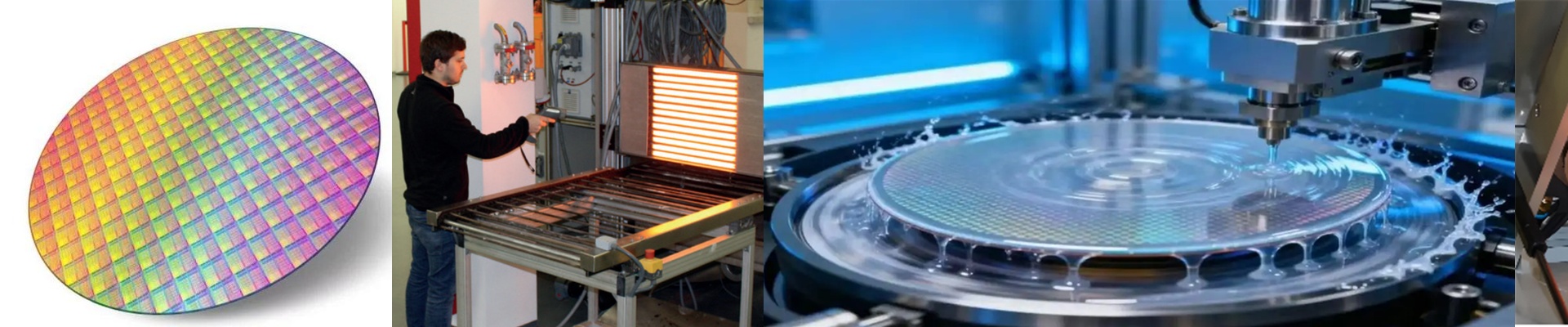
In the fab, your wafer heater has one job: hit the setpoint quickly and hold it like a pro. Our infrared system does exactly that. You cut dwell time and use less energy, which adds up fast. The result is a cleaner thermal profile, which means less process drift and fewer reworks. But wait—there is one thing to keep in mind. This kind of high heat density needs a properly spec’d cooling system to manage the ambient heat in the chamber. And the best part? It’s designed as a drop-in replacement, so it works with what you already have. No massive line redesign. Just swap it in and get moving. If you’re pushing for a greener factory, the energy savings translate straight into lower CO₂ per wafer. That’s real progress. That’s your fab moving closer to carbon neutrality—without sacrificing performance.